E-Commerce Platforms
Introducing Geeb: A Connected Marketplace for Food, Groceries and Everyday Delivery
By Admin Tenant 1 ·
Explore Geeb, Codeniza’s delivery-marketplace project connecting customers, merchants and riders. Browse the English and Arabic demo, view actual screenshots and follow the delivery workflow.

A delivery order starts with a small decision: what do I need, and who can bring it? Behind that decision is a chain of work. A customer chooses a store, a merchant prepares the order, dispatch coordinates the handover, and a rider takes it to the doorstep. A useful marketplace connects those people around the same order.
Geeb is Codeniza's delivery-marketplace project for restaurants, groceries and everyday retail. It combines a customer storefront with merchant, rider and platform workflows, in English and Arabic. The current public demonstration displays the name DeliveryHub; the Geeb address opens that existing demo. Stores, accounts, reviews, delivery estimates and order history in the demonstration are synthetic sample data.
Explore the Geeb delivery marketplace →
Start with the neighbourhood, then choose the store
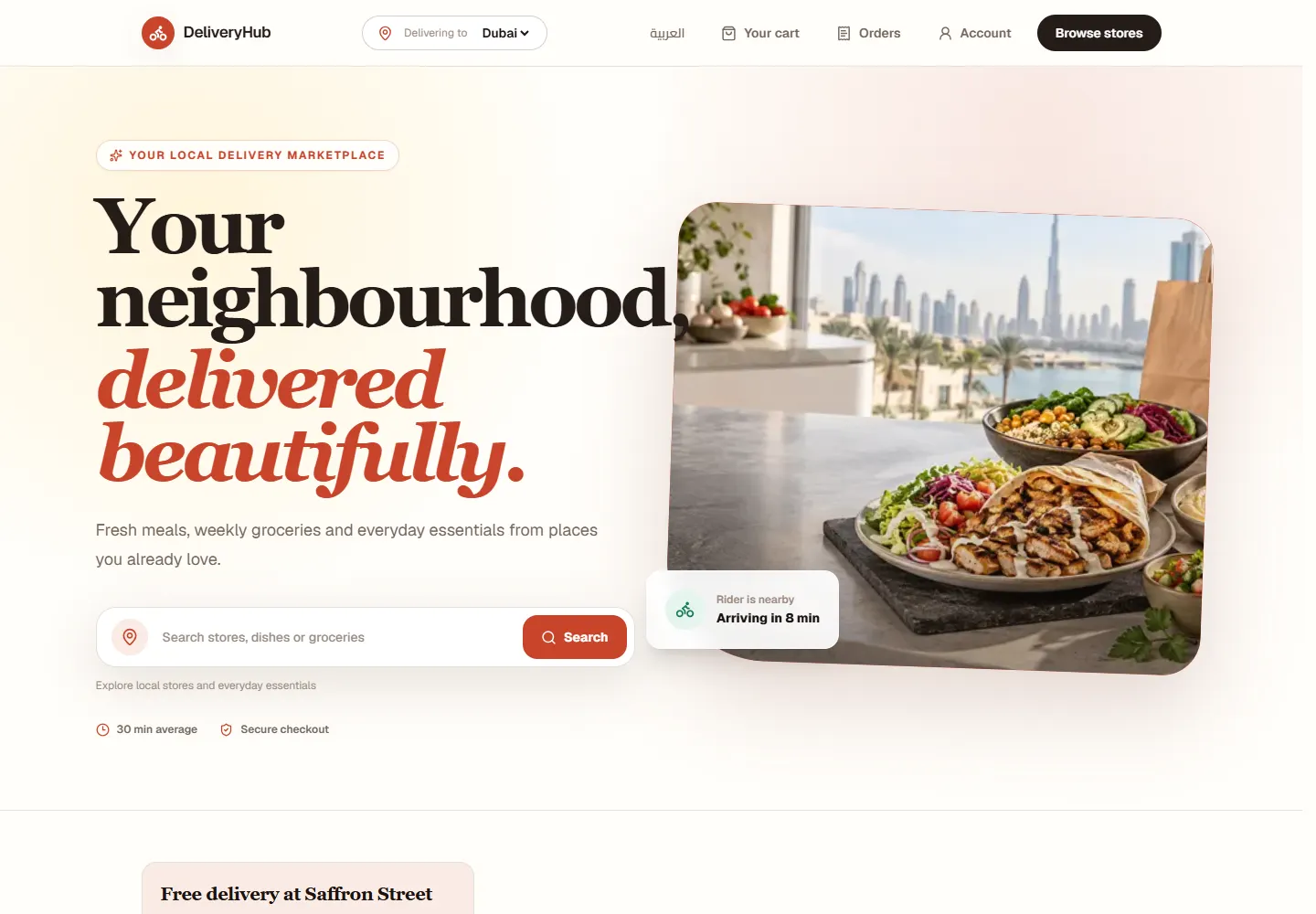
The storefront gives customers a clear starting point: choose a delivery market, search for a store or item, or browse categories such as restaurants, groceries, convenience and flowers. Store cards bring the essential information together, including the store's current availability, category, displayed delivery estimate, rating and delivery fee.
That first screen should help a customer make a choice without opening every store. The sample catalogue spans different cuisines and everyday shopping needs, giving visitors room to compare a restaurant menu with a grocery catalogue. Switching to Arabic changes the language and layout while preserving the same marketplace context.
Make the menu useful before checkout
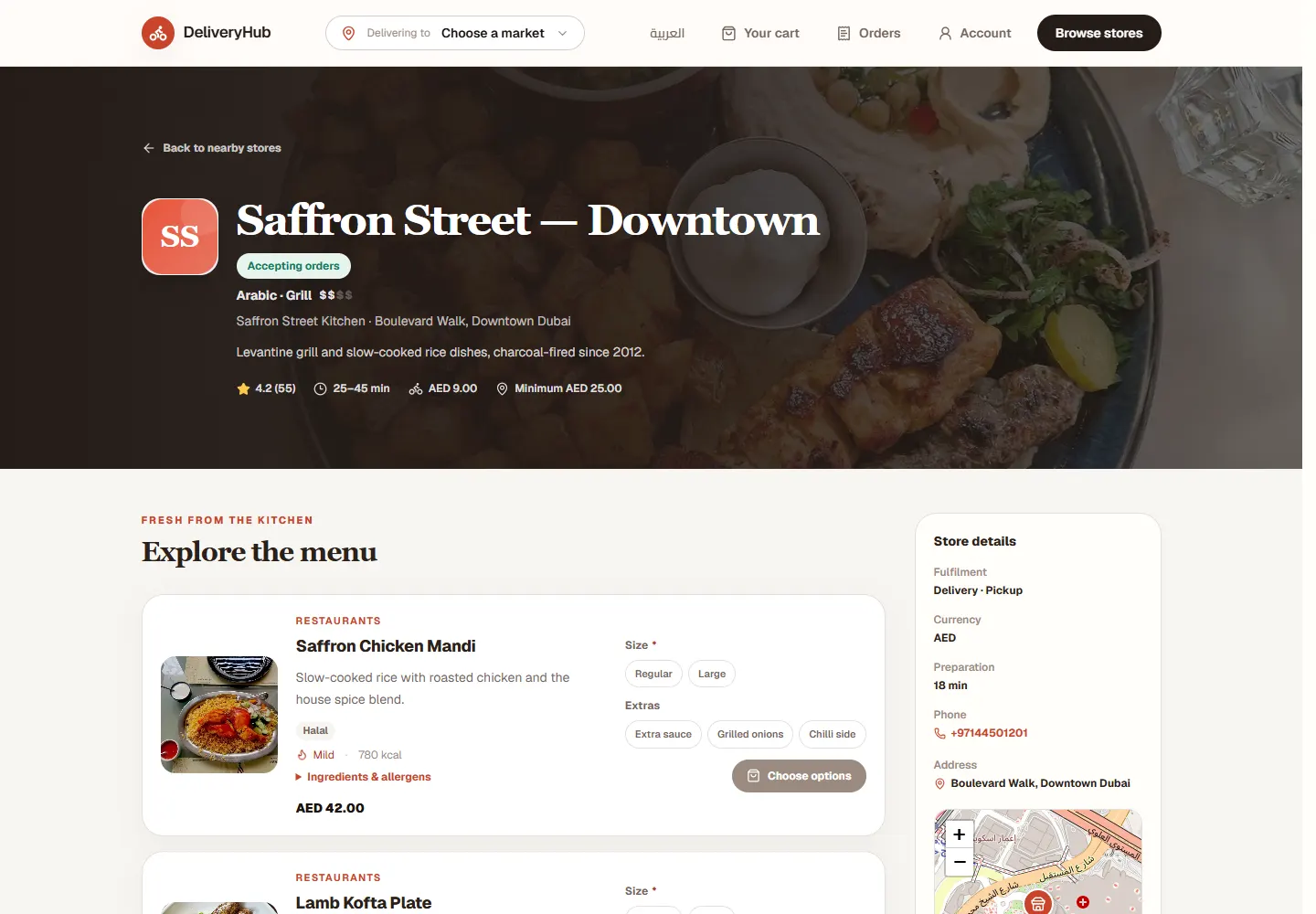
A store page brings its location, preparation estimate, minimum order, delivery charge and fulfilment options into view. Product cards add descriptions, prices and available options. Where the sample catalogue supplies them, dietary information, ingredients and allergen details help explain what a product contains.
Required choices and optional extras have separate controls, so a customer can understand what they need to select. Availability also belongs at the product level: an item may have a selling window even when the wider store is open. The demo makes these details visible in context instead of leaving every question until checkout.
Follow one order through several responsibilities
The customer experience is one part of the platform. Merchant workflows cover accepting an order, preparing it and marking it ready. Dispatch provides the operational step between preparation and delivery, while rider workflows cover offers, collection, travel and completion.
The project includes handover codes for pickup and delivery, helping structure the change of responsibility between the store, rider and customer. The order timeline gives the customer a way to follow milestones, while the relevant staff screens focus on the next action. For an evaluator, the useful question is whether those views tell a consistent story about the same order.
Bring daily operations into the wider picture
A marketplace also needs tools around the delivery itself. Geeb includes customer order history, merchant reporting, rider reporting, support workflows and platform administration. Seeded history gives the demonstration something to explain beyond an empty dashboard: visitors can inspect sample records and see how different roles relate to the wider business.
Access follows each participant's responsibilities. The public login page provides limited customer, merchant and rider demo accounts. Presenter and administrator access remains separate. This makes it possible to explore several perspectives without publishing the credentials used to operate the demonstration.
English and Arabic are part of the journey
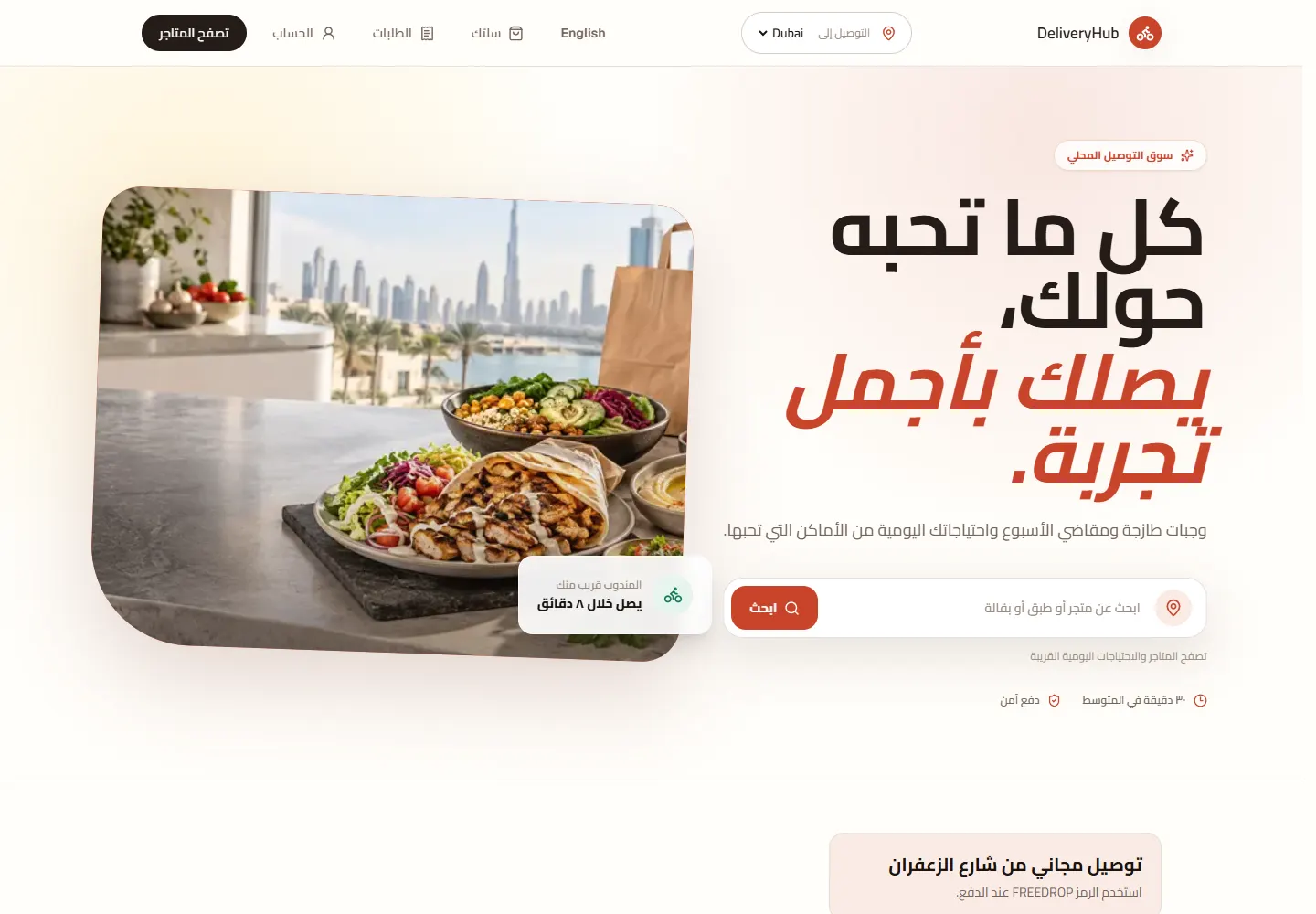
The web experience supports English and Arabic, including right-to-left layouts. This matters across the journey: browsing stores, reading product details and navigating a role-specific portal should remain understandable in the selected language. The Arabic storefront uses the same sample marketplace rather than becoming a disconnected presentation.
A useful first visit
- Open the marketplace. Browse the English or Arabic storefront and compare store categories.
- Explore a menu. Look at product options, availability and the store's delivery information.
- Visit the login page. Use one of the limited demo accounts shown there to explore the customer, merchant or rider view.
- Review sample history. Compare the records and reports available to that role.
Open the demo login and choose a role →
This is a shared product demonstration with synthetic records. Checkout is configured for cash on delivery. Online payment, email/SMS delivery and push providers are not configured for a production launch; signup and password-reset messages are not delivered publicly. Use the displayed sample accounts to explore. Delivery estimates and promotional figures are demo presentation data, not service commitments.
Catalogue photo attribution is available on the demo's photo credits page. The cover uses the project's existing delivery artwork; the screenshots show the actual web demo.
Geeb offers a concrete way to discuss a delivery marketplace: start with a customer's choice, follow the operational handovers, and assess the information each participant needs. Explore the demo, then discuss the branding, geography, integrations and launch requirements of your own marketplace with Codeniza.